One Strat, Two Very Different Voices
Amazon Associate Disclaimer As an Amazon Associate, we may earn from qualifying purchases. This comes at no extra cost to you and helps support our website.
The Guitar That Won’t Make You Choose a Lane
There’s a particular kind of frustration that shows up once you’ve been playing for a while. You love the clean, glassy sound of a single-coil Strat for rhythm parts and gentle leads, but the second you want to push into something heavier — a solo that needs to cut through a full band mix, or a riff that wants some real growl — that same pickup starts fighting you. You end up either compromising the tone or reaching for a second guitar entirely.
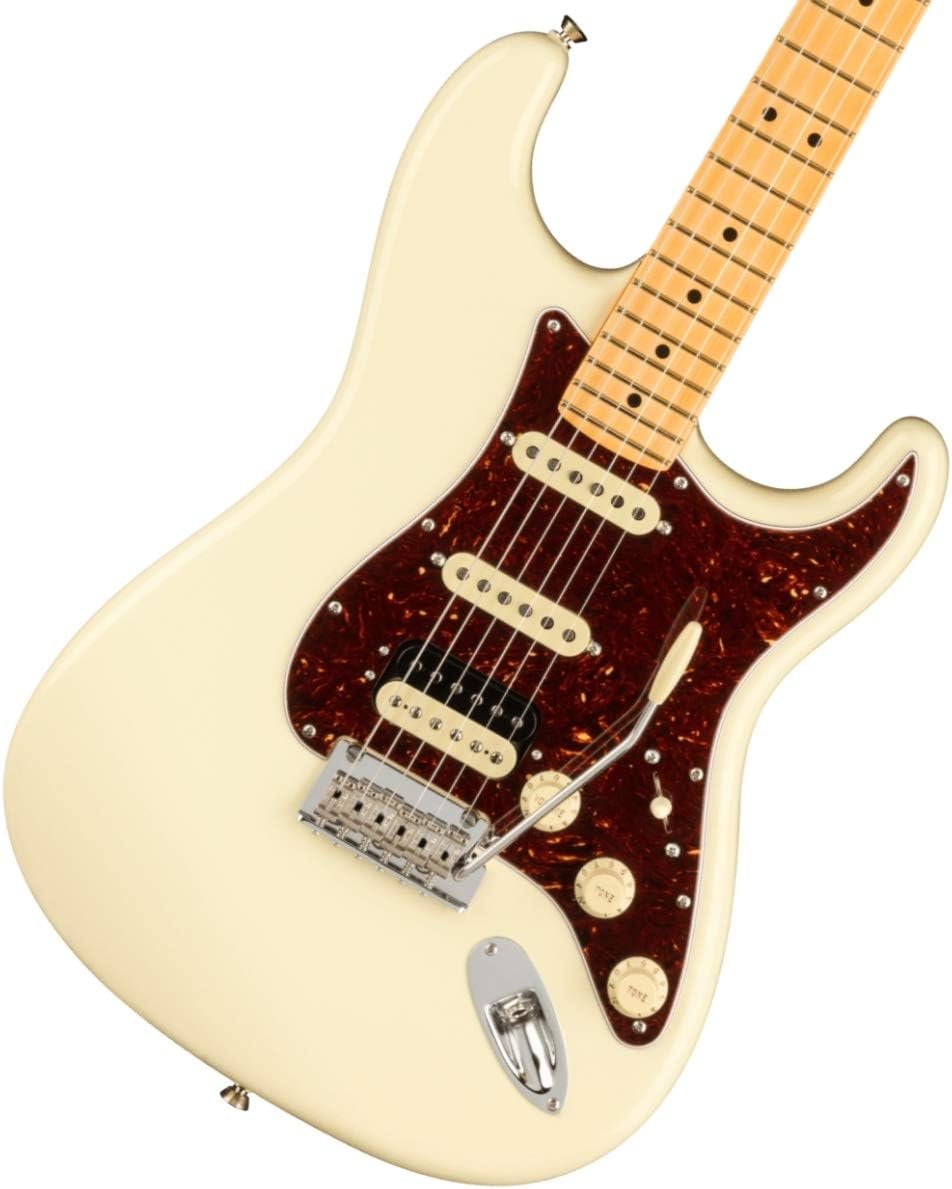
The Stratocaster HSS exists specifically for players tired of that trade-off. It keeps the two single-coils in the neck and middle positions that make a Strat sound like a Strat, but swaps the bridge pickup for a humbucker. It’s a small change on paper. In practice, it rewrites what the guitar is capable of.
Two Pickup Types, One Instrument
The V-Mod II single-coils handle the neck and middle positions, and they’re voiced the way most players expect a Fender to sound — bright without being thin, with that slightly bell-like top end that makes clean arpeggios and chord work feel alive. If you’re writing a verse that needs some space and clarity, or laying down a rhythm part under a vocal, this is the tone that gets you there without any extra shaping.
The bridge position is where things change. A Double Tap humbucker sits there instead of the usual single-coil, built for the moments where you need output and thickness rather than sparkle. Lead lines that would sound thin or brittle through a standard Strat bridge pickup come through with more body and sustain here. It’s the difference between a solo that pokes through the mix and one that has to fight for space.
Why This Matters More Than It Sounds
A lot of guitars claim versatility, but true versatility usually means real trade-offs somewhere in the signal path. What makes the HSS layout worth paying attention to is that you’re not blending compromises — you’re getting two distinct, purpose-built voicings on the same instrument, selectable in a fraction of a second. For a home player working through several songs in one sitting, that means never having to stop and swap guitars just because the next part calls for a different character.
For anyone recording at home, this becomes even more useful. Tracking a clean rhythm bed, then switching to the bridge pickup for an overdubbed lead, all without changing instruments, keeps a session moving. You’re not losing momentum hunting for a second guitar or reamping a part to get the tone you actually wanted.
Built Around Comfort, Not Just Tone
Underneath all of this is still a proper American Professional II build. The alder body keeps things balanced tonally — present in the mids without turning muddy, which matters even more on a guitar carrying a humbucker, since that pickup type can lean thick if the body doesn’t give it room to breathe.
The contoured neck heel is worth mentioning too, and not as an afterthought. Reaching the upper frets is where a lot of solos either open up or get abandoned halfway through, depending on how much the neck joint gets in the way. A heel that’s been shaped for access rather than left as a blocky obstacle means the top of the neck stops being a stretch and starts being just another part of the fretboard you use freely.
The Practical Side of Switching Tones Mid-Song
If you play in a band, you already know how often a set list demands tonal range you don’t always have on hand. A rhythm-heavy verse followed by a searing chorus lead is one of the most common structures in modern songwriting, and it’s exactly the situation where a single-coil-only guitar starts to show its limits. Having the humbucker available at the flick of a switch means you’re not relying on pedals alone to manufacture that shift — the guitar itself is doing some of that work.
For songwriters working through ideas at home, this kind of range can also open up parts you wouldn’t have written otherwise. It’s easy to default to whatever tone is easiest to reach. When switching from clean to driven takes zero extra effort, you’re more likely to actually try the heavier idea instead of leaving it for “later,” which in practice often means never.
Where This Guitar Actually Fits
Beginners chasing a classic Strat sound will still find that reference point fully intact through the neck and middle pickups — nothing about the HSS layout takes that away. What it adds is somewhere to grow into once a heavier riff or a more aggressive solo starts calling for something the single-coils alone can’t quite deliver.
Players who’ve been gigging or writing for a while, and who’ve felt that specific frustration of a Strat running out of headroom on a driven part, are the ones most likely to reach for this pickup layout instinctively. It doesn’t ask you to abandon the sound you already like — it just gives you somewhere else to go when the song needs it.
Whether it ends up covering rhythm work through a clean amp, handling recorded overdubs at home, or filling both roles across a live set, the appeal isn’t really about one dramatic tone. It’s about not having to choose which version of your playing style you bring to the gig or the session — and having both ready, on the same instrument, whenever the moment calls for it.
Check It Out!