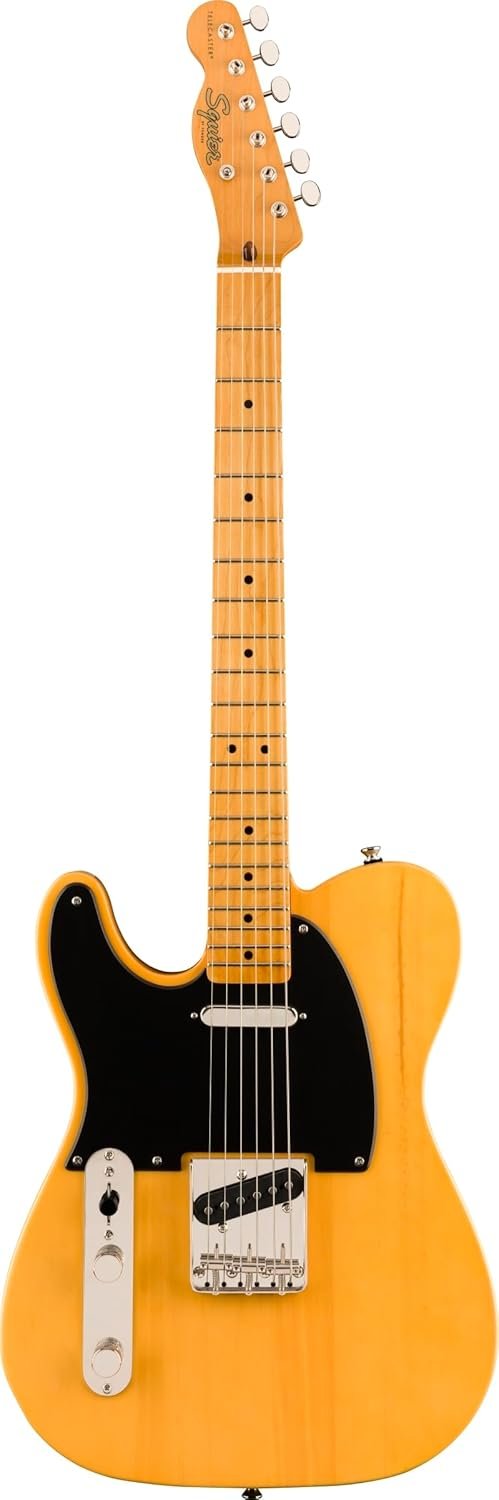
Squier Classic Vibe ’50s Left-Handed Telecaster
As an Amazon Associate I earn from qualifying purchases.
Finding a well-made left-handed electric guitar isn’t always straightforward. There are fewer models, fewer finishes and often limited availability compared with right-handed instruments. That makes the Squier Classic Vibe ’50s Left-Handed Telecaster particularly interesting.
Finished in traditional Butterscotch Blonde with a black pickguard and maple neck, this guitar captures the unmistakable appearance of an early Fender Telecaster.
More importantly, it offers Fender-designed Alnico pickups, a comfortable C-shaped neck and traditional string-through-body construction in a genuine left-handed instrument.
For players who appreciate classic Telecaster simplicity, there’s plenty here worth considering.
Why This Left-Handed Telecaster Stands Out
The Classic Vibe series takes inspiration from Fender’s earlier guitar designs while incorporating several practical modern specifications.
This particular model features a pine body with a gloss polyurethane finish, vintage-style hardware and the familiar single-cutaway Telecaster shape.
The Butterscotch Blonde finish and contrasting black pickguard give the instrument a traditional appearance without unnecessary decoration.
Its straightforward construction is part of the appeal. There are no complicated switching systems, active electronics or elaborate tremolo mechanisms.
Instead, the guitar concentrates on two pickups, a comfortable neck and a fixed bridge.
For left-handed players who want the familiar Telecaster design without having to adapt a right-handed guitar, that simplicity is particularly welcome.
Fender-Designed Alnico Pickups
The guitar uses two Fender-designed Alnico single-coil pickups, controlled by a three-position selector switch.
The bridge pickup provides the bright, articulate character commonly associated with Telecasters. It is particularly relevant for country, blues, classic rock and rhythm playing where individual notes need to remain clear.
The neck pickup offers a warmer, rounder character that can suit softer rhythm passages and melodic leads.
Selecting both pickups together provides another tonal option, balancing elements of the bridge and neck sounds.
Master volume and tone controls allow further adjustment without adding unnecessary complexity.
This traditional arrangement won’t offer the same high-output character as a guitar equipped with modern humbuckers, but that is not its intended purpose.
The attraction lies in the familiar response and musical versatility of the classic Telecaster pickup configuration.
A Comfortable Maple Neck
The Classic Vibe ’50s uses a maple neck with a slim C-shaped profile.
This provides a gently rounded shape that should feel approachable to players who prefer a conventional Fender-style neck rather than something unusually thick or flat.
The maple fingerboard has a 9.5-inch radius and 21 narrow-tall frets.
That combination offers a balance between comfortable chord playing and modern fretting techniques.
The 25.5-inch scale length provides the familiar string response associated with Fender-style electric guitars, although string gauge and setup will influence the actual feel.
A vintage-tinted gloss urethane finish gives the neck its traditional golden appearance.
Players who enjoy a smooth, polished neck may appreciate this finish, while those who prefer the drier feel of satin should consider that difference carefully.
Traditional Bridge and Hardware
The Squier uses a three-saddle, string-through-body Telecaster bridge with chrome barrel saddles.
This is an important part of the instrument’s vintage-inspired design.
Rather than providing a separate saddle for every string, the traditional arrangement shares each saddle between two strings.
The bridge keeps the appearance close to early Telecaster models, although it introduces some compromises when adjusting intonation.
Vintage-style tuning machines complete the traditional hardware arrangement.
The guitar also includes a bone nut and nickel-plated hardware.
These are useful construction details, but proper setup remains important. Even a well-specified guitar may require adjustments to string height, intonation or neck relief to suit an individual player.
A Genuine Left-Handed Instrument
For left-handed guitarists, the correct orientation matters.
This Squier is manufactured as a left-handed Telecaster, with the body, neck and controls arranged for left-handed playing.
That avoids the compromises associated with simply reversing the strings on a conventional right-handed guitar.
The bridge, nut and instrument layout are designed around the intended playing orientation.
For guitarists who have spent time searching through right-handed listings, finding the correct factory-made version in a classic finish is an advantage.
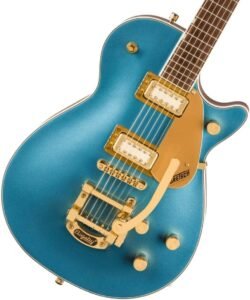
Another left-handed option worth exploring is the Gretsch G5220LH Electromatic Jet, which takes a different approach with its own body styling and dual Broad’Tron pickup arrangement.
Players interested in another instrument from Squier’s vintage-inspired range can also explore our Squier Classic Vibe ’60s Jazzmaster guide, although the handedness of any individual listing should be checked carefully.
The Drawbacks
The Classic Vibe ’50s Left-Handed Telecaster has plenty of appeal, but its vintage-inspired design brings several practical limitations.
The Three-Saddle Bridge Requires Compromise
The traditional bridge is one of the guitar’s defining features, but it isn’t as adjustable as a modern six-saddle design.
Because two strings share each saddle, achieving perfect individual intonation can be more difficult.
For everyday playing, a carefully adjusted three-saddle bridge can perform perfectly acceptably.
However, guitarists who are particularly sensitive to intonation differences, or regularly use alternative string gauges, may prefer individually adjustable saddles.
A professional setup can help achieve the best compromise.
Single-Coil Pickups Can Produce Hum
The two Alnico single-coil pickups provide traditional Telecaster sounds, but they can also pick up electrical interference.
Background hum may become more noticeable when using distortion pedals or high-gain amplifier settings.
This is a characteristic of conventional single-coil designs rather than a fault unique to this model.
Players who regularly perform heavier music may prefer noiseless pickups or a guitar equipped with humbuckers.
The Squier is better suited to musicians who specifically appreciate traditional single-coil character.
The Gloss Neck Won’t Suit Everyone
The vintage-tinted gloss finish gives the maple neck an attractive, polished appearance.
However, a glossy neck can feel less comfortable to some guitarists, particularly during longer playing sessions or in warm conditions.
Players who prefer a satin neck may find that the finish creates more noticeable friction against the fretting hand.
This is largely a matter of personal preference, but it is worth considering before buying.
Limited Left-Handed Availability
The biggest frustration may be finding the guitar consistently available.
Left-handed instruments are produced and stocked in smaller quantities than equivalent right-handed models.
That can mean fewer finish choices, limited stock and less opportunity to compare several examples before purchasing.
It is particularly important to check that an online listing identifies the genuine left-handed version.
Product photographs, selection menus and seller descriptions should all agree.
The correct model should never be assumed simply because a listing includes both left-handed and right-handed options.
A Setup May Be Necessary
Although the Classic Vibe has respectable specifications, individual instruments can vary in their factory setup.
String action, neck relief, pickup height and intonation may require adjustment.
The supplied .009–.042 strings may also feel too light for guitarists accustomed to heavier gauges.
Changing strings can affect the setup, especially when moving to a significantly different tension.
A suitable professional adjustment may be worthwhile if the guitar does not arrive playing exactly as expected.
No Tremolo or Modern Switching Features
This is a deliberately straightforward Telecaster.
It has a fixed bridge, two single-coil pickups and conventional three-way switching.
There is no tremolo system, coil-splitting arrangement or additional electronic switching.
For players who enjoy traditional Telecaster simplicity, these omissions are not necessarily disadvantages.
However, guitarists wanting extensive tonal options, high-output pickups or dramatic pitch effects may prefer a more modern design.
The limited feature set should match the player’s musical preferences rather than simply the guitar’s appearance.
Who It Suits Best
The Squier Classic Vibe ’50s Left-Handed Telecaster is particularly suitable for left-handed guitarists who enjoy blues, country, classic rock and traditional electric guitar sounds.
It offers a recognisable Fender-inspired design without introducing complicated electronics or unnecessary controls.
The neck dimensions should appeal to players who prefer a conventional C-shaped profile, while the fixed bridge provides a straightforward playing arrangement.
For more carefully selected instruments covering different pickup configurations, neck designs and playing styles, explore our Electric Guitars collection.
Guitarists who require high-output humbuckers, a tremolo or extensive switching flexibility may find another design more appropriate.
Is This Left-Handed Telecaster Worth Considering?
The Squier Classic Vibe ’50s Left-Handed Telecaster combines traditional styling, Fender-designed Alnico pickups and a practical neck specification in an instrument built specifically for left-handed players.
Its Butterscotch Blonde finish, black pickguard and vintage-style hardware provide the unmistakable character of a classic Telecaster.
There are compromises, particularly the three-saddle bridge, potential single-coil hum and limited availability of left-handed instruments.
Nevertheless, for guitarists who appreciate the simplicity, sound and appearance of an early Telecaster, this Squier offers a convincing combination of traditional design and everyday playability.
Most importantly, it gives left-handed musicians the opportunity to enjoy a classic guitar layout without settling for an instrument designed for someone else’s playing orientation.
As an Amazon Associate I earn from qualifying purchases.