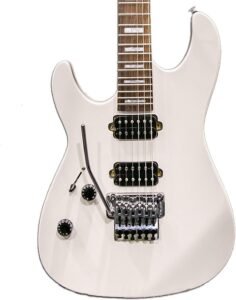
Donner DST-152R Electric Guitar

As an Amazon Associate I earn from qualifying purchases.
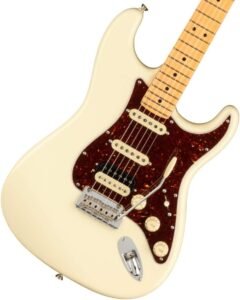
The Donner DST-152R is the sort of electric guitar that makes sense for players who want something approachable without feeling overly basic. Its familiar Strat-style shape gives it a comfortable, balanced feel, while the HSS pickup layout adds enough flexibility to cover cleaner sounds, crunchy rhythm work and more driven lead tones. For beginners especially, that versatility can be useful because it gives plenty of room to experiment before deciding what kind of sound or playing style suits them best.
Why it works as a first electric guitar
One of the strongest points of the Donner DST-152R is that it gives a new player a familiar, uncomplicated place to start. The double-cutaway Strat-style body offers easy access along the neck, and the overall layout will feel immediately recognisable to anyone who has spent time looking at mainstream electric guitars.
The HSS pickup arrangement also makes sense for a first instrument. A humbucker in the bridge position gives a thicker, stronger sound for rock and heavier rhythm playing, while the single-coil positions open up brighter, cleaner tones. That means a beginner can explore several styles without quickly feeling that the guitar is pushing them in only one direction.
It is also the kind of guitar that should be easy to live with at home. The body shape is relatively slim, the controls are straightforward, and there is nothing especially intimidating about the setup. For someone learning chords, scales and basic lead playing, that simplicity matters more than an overloaded feature list.
What it feels like to use
The DST-152R has the familiar feel of a Strat-style guitar, with a contoured body that sits comfortably against you whether you are practising seated or playing while standing. That shape has endured for decades for a reason: it does not feel bulky, and the upper-fret access is much less restrictive than on many single-cutaway designs.
For a newer player, the neck and control layout should feel reassuringly straightforward. There is enough room to move between open chords, barre chords and basic lead work without the guitar feeling awkward or overcomplicated. The tremolo system also gives beginners a chance to experiment with subtle pitch effects once they are comfortable with the basics.
Tonally, the appeal is variety rather than one signature sound. The bridge humbucker gives the guitar a fuller, denser character, while the single-coil positions can sound lighter and more open. That makes practice more interesting because changing pickup positions genuinely changes the personality of the instrument rather than simply making it louder or quieter.
The drawbacks
The main limitation is that the Donner DST-152R sits in a very competitive part of the market. It offers a lot for a newer player, but it should not be approached with the expectation that it will have the same consistency, finishing or hardware quality as a more expensive Fender or higher-end Squier.
Setup is another point worth keeping in mind. Budget and entry-level guitars can sometimes benefit from a little adjustment after delivery, particularly around action, intonation and tuning stability. A beginner may not immediately know whether something feels slightly off, so having the guitar checked by an experienced player or local guitar technician can be worthwhile.
The tremolo system is useful for experimenting, but it can also introduce another variable for a new guitarist. Heavy use may make tuning more demanding, especially if the instrument has not been set up carefully. Players who have no interest in tremolo effects may prefer a simpler fixed-bridge guitar.
The HSS layout gives useful versatility, although that flexibility comes with a trade-off. It will not quite deliver the traditional all-single-coil Strat character in every position, nor will the bridge humbucker turn it into a dedicated heavy-rock guitar. It is better viewed as a broad, adaptable instrument rather than a specialist one.
Brand value is worth considering too. Donner has built a strong presence in affordable music gear, but it does not carry the same resale appeal or long-term reputation as Fender, Squier, Yamaha or Ibanez. If you already know you are going to stick with guitar for years, spending more initially on one of those established brands may make sense.
Who it suits best
The Donner DST-152R makes the most sense for beginners who want their first electric guitar to offer a little more flexibility than the most basic starter models. The HSS pickup layout gives enough tonal range to explore pop, blues, rock, indie and heavier styles without immediately feeling the need to change instruments.
It also suits returning players who want an inexpensive guitar for casual practice at home. If you already understand the basics and simply want something familiar to pick up in the evening, the Strat-style shape and conventional control layout make it easy to settle into.
Where it becomes less suitable is for players who already know exactly what they want from an instrument. Someone chasing a very traditional Strat sound, a heavier dual-humbucker setup or a guitar with stronger long-term resale value may be better served by moving further up the market.
For a first-time buyer, though, its biggest strength is that it leaves room to discover preferences. You can experiment with different pickup positions, playing styles and amp settings before deciding what kind of guitar you might eventually want to upgrade to.
Is it worth the guitar rack space?
For the right player, the Donner DST-152R earns its place on the guitar rack by being approachable, versatile and easy to understand. It is not trying to be a premium instrument, and that is important to keep in perspective. Its appeal is that it gives a newer guitarist a practical way to explore several sounds and styles without immediately needing a collection of different guitars.
The Strat-style body, HSS pickup layout and familiar controls make it particularly useful as a learning instrument. There is enough variety here to keep practice interesting, and enough conventional design that moving later to a Fender, Squier, Yamaha or another mainstream electric should feel natural rather than completely unfamiliar.
The drawbacks are mostly the ones you would expect at this level: setup consistency may vary, the hardware will not feel as substantial as more expensive guitars, and the Donner name will not carry the same resale strength as the bigger established brands. For a committed player who already knows exactly what they want, spending more can make sense.
For a beginner or casual player, though, the DST-152R offers a sensible balance. It gives you room to learn, experiment and develop your own preferences, which is exactly what a first electric guitar should do.
Take a closer look