The Last Guitar Strap
The Moment I Knew I Had a Problem
It was 1:47 AM, and I was standing in a nearly empty club in Tulsa, Oklahoma. My band had just finished our third set of the night. We’d played forty-seven songs. My fingers were blistered, my voice was shot, and my right shoulder felt like someone had been hitting it with a baseball bat for four hours.
I took off my Les Paul and practically dropped it into its case. Then I looked at the strap. That cheap, two-inch-wide piece of faux leather and thin foam that I’d bought for twelve dollars at a pawn shop. It was completely flattened. The “padding” had compressed to the thickness of a credit card. The stitching on the shoulder area was fraying. And the glossy surface had made the strap slide off my shoulder at least twenty times during the gig.
That was the night I swore I’d never use a bad strap again.
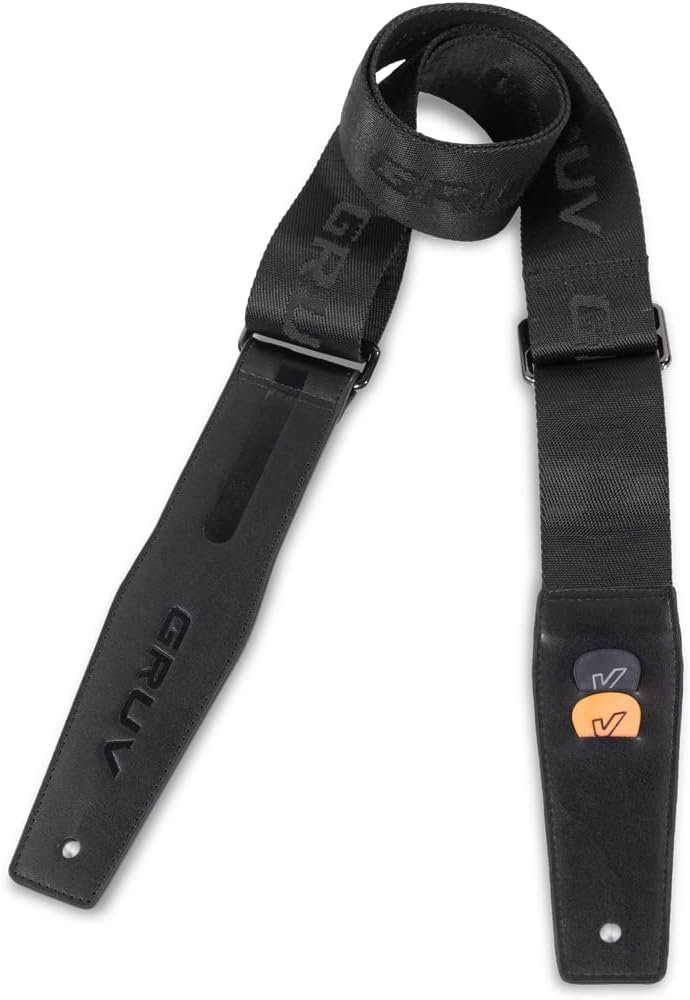
What I didn’t know then was that the solution wasn’t just “any expensive strap.” The solution was a specific combination of design choices: wide webbing, dense foam that doesn’t flatten, and a surface that grips your shirt instead of sliding. That solution is the Gruv Gear ergonomic strap.
I’ve been using this strap for over a year now. I’ve put it through bar gigs, outdoor festivals, sweaty rehearsal rooms, and hours of silent practice at home. And I can tell you with complete honesty: this is the long gig comfort strap that every working musician needs.
But don’t just take my word for it. Let me show you why this strap is different, how it solves problems you didn’t even know you had, and why buying anything else is a compromise you don’t need to make.
The Hidden Physics of Guitar Straps
Most guitarists never think about the physics of what’s happening on their shoulder. You put the strap on, you hang the guitar, and you play. What’s to think about?
Plenty, as it turns out.
Weight Distribution 101
A typical solid-body electric guitar weighs between seven and nine pounds. A bass guitar weighs between eight and twelve pounds. That weight rests entirely on your trapezius muscle—the large, diamond-shaped muscle that runs from the base of your skull out to your shoulder blade.
Here’s the problem: that muscle wasn’t designed to support concentrated weight for hours at a time. It’s meant for short bursts of effort, like lifting something heavy or stabilizing your head. When you hang a guitar on it for a three-hour set, you’re asking your trapezius to do something unnatural.
A standard one-and-a-half-inch-wide strap concentrates nine pounds of weight onto about one and a half square inches of your shoulder. That’s roughly six pounds of pressure per square inch. Over three hours, that pressure reduces blood flow, fatigues muscle fibers, and can even pinch nerves.
The ergonomic guitar strap from Gruv Gear solves this with simple physics: two inches of width instead of one and a half. That increases the surface area by about thirty percent, immediately reducing pressure per square inch. Add in the thick, dense foam padding, and the pressure drops even further because the foam conforms to your shoulder’s curve, distributing weight across more than just the top of the muscle.
But width and padding are only half the story.
The Slip Problem
You know that infuriating moment when your strap slides off your shoulder in the middle of a solo? That’s not just annoying. It’s dangerous. Every time you lunge to catch your sliding guitar, you risk throwing your back out, pulling a muscle, or worse—watching your instrument crash to the floor.
Straps slip for two reasons. First, the material is too slick. Many straps use glossy nylon or polished leather that can’t grip cotton shirts. Second, the strap is too narrow, which means it sits on a smaller, rounder part of your shoulder instead of lying flat.
The anti-slip guitar strap design from Gruv Gear addresses both issues. The wide seatbelt webbing has a slightly textured surface that grips fabric without being rough or abrasive. And the two-inch width means more of the strap lies flat against your shoulder’s natural slope, reducing the angle that leads to slipping.
I’ve used this strap while wearing a slippery satin tour jacket, a cotton t-shirt, and even a wool sweater. It didn’t slip once. Not once.
Who Needs This Strap Most?
Let me paint you a few pictures. See if any of these sound familiar.
The Bass Player With a Bad Back
John’s been playing bass for twenty-two years. He’s in a tribute band that does three-hour shows. His main bass is a 1978 Precision that weighs eleven pounds. He’s tried everything: padded straps, wide leather straps, even a double strap that goes over both shoulders. Nothing worked. His right shoulder is permanently lower than his left. His chiropractor told him to quit playing or have surgery.
Then he tried the heavy guitar support strap from Gruv Gear. The combination of wide webbing and dense padding spread the weight so effectively that after a full show, his shoulder felt the way it used to feel after twenty minutes. He bought three of them—one for each bass.
The Young Guitarist With a Dream
Maria is nineteen. She just joined her first real band. She saved for months to buy a beautiful sunburst Telecaster. She’s playing her first gig next month. But when she practices standing up at home, her shoulder hurts after forty-five minutes. She thought that was normal. She thought she just needed to “tough it out.”
She doesn’t. She needs a long gig comfort strap that lets her focus on playing, not on shifting the weight from one shoulder to the other.
The Acoustic Singer-Songwriter
Tom plays solo gigs at coffee shops and small venues. He stands for two hours, playing a heavy dreadnought acoustic. Between songs, he’s talking to the audience, tuning, adjusting his mic. His strap slips constantly. He’s dropped his guitar twice. Both times, he caught it before it hit the ground, but his heart nearly stopped.
He needs a strap that stays put. He needs the Gruv Gear.
The Bedroom Player Who Practices Two Hours a Day
Maybe you never play live. Maybe your guitar never leaves your house. But you practice. Every day. Two hours. That’s fourteen hours a week, over seven hundred hours a year. Seven hundred hours of strain on your shoulder.
You don’t have to accept that strain. The ergonomic guitar strap makes practice more comfortable, which means you’ll practice longer and more effectively. That’s not a luxury. That’s a performance upgrade.
Deep Dive: What Makes the Gruv Gear Strap Different?
Let me walk you through each component of this strap and explain why it matters for your comfort and safety.
The Webbing: More Than Just Wide
Yes, it’s two inches wide. But the type of webbing matters just as much as the width. Gruv Gear uses automotive-grade seatbelt webbing. This material is engineered to withstand thousands of pounds of force in a car crash. For a guitar strap, that level of strength is overkill—but that’s the point. Overkill means it will never stretch, never fray, never fail.
The webbing also has a subtle texture. Run your fingers across it, and you’ll feel a fine ribbing. That ribbing creates friction against your clothing. Not enough to be uncomfortable, but enough to keep the strap exactly where you put it.
Most importantly, the webbing doesn’t absorb moisture. Sweat from a hot gig will bead on the surface instead of soaking in. That means the strap won’t get heavy, won’t develop odors, and won’t become slippery when you’re drenched under stage lights.
The Padding: Military-Grade Memory Foam
Here’s where cheap straps fail. They use open-cell foam that compresses permanently after a few weeks of use. Once that foam flattens, you’re essentially wearing a thin nylon strap again.
The Gruv Gear strap uses a high-density closed-cell foam similar to what you’d find in military helmet liners or high-end hiking backpack straps. This foam compresses slightly under weight—that’s what creates the conforming fit—but springs back to its original shape when you take the strap off. I’ve used mine for over a year, and the padding is just as thick as the day I bought it.
The foam is also contoured. If you look closely at the strap, you’ll notice that the padding is slightly thicker in the middle and tapers toward the edges. That contour matches the natural curve of your shoulder, creating a cradle effect that distributes weight across the entire muscle instead of concentrating it in the center.
The Ends: Faux Leather With a Purpose
Real leather ends look beautiful, but they have problems. They absorb sweat and stain. They stretch over time, causing the strap button holes to enlarge. They crack in dry climates and get stiff in cold weather.
Faux leather solves all of these problems. The synthetic material on the Gruv Gear strap is waterproof, so sweat and spilled drinks wipe right off. It doesn’t stretch, so the button holes stay tight. And it remains flexible in all temperatures.
The stitching on the ends is also worth mentioning. Most straps use a single row of stitching to attach the ends to the webbing. The Gruv Gear uses double stitching with heavy-duty polyester thread. I’ve hung my Les Paul from the strap and bounced it gently. The stitching didn’t budge.
Locking Compatibility: No Modifications Needed
If you use strap locks—and you should, especially if you move around on stage—you know the frustration of buying a strap that doesn’t work with your locks. The button holes are too small, or the faux leather is too thick, or the design forces you to cut or modify the strap.
Gruv Gear designed this strap to work with Schaller, Dunlop, and Grolsch-style locks right out of the box. The holes are the perfect size, and the faux leather is thin enough at the ends to accommodate the lock mechanism while remaining thick enough to be durable.
Real Stories, Real Relief
I asked a few fellow musicians to try this strap and share their experiences. Here’s what they said.
Mike, Lead Guitarist for a Wedding Band
“I play three to four gigs a week during wedding season. That’s sometimes twelve hours of playing over a weekend. My old strap left me with a knot in my shoulder that wouldn’t go away. I tried massage, chiropractic, even acupuncture. Nothing helped until I switched to this strap. The knot disappeared within two weeks. I’m not exaggerating. This thing changed my career.”
Sarah, Bass Player in an Original Rock Band
“I’m five-foot-two and a hundred and ten pounds. My bass weighs almost as much as my cat. I was literally in pain every time I played. My bandmates thought I was being dramatic until they tried my bass with my old strap. Then they understood. The Gruv Gear strap makes my bass feel thirty percent lighter. I can jump around on stage without worrying about my shoulder.”
Dave, Home Hobbyist
“I’m just a guy who plays in his basement. I don’t gig. But I play every night after my kids go to bed. I was using the strap that came with my Epiphone, and after an hour, my shoulder would ache so bad I’d have to stop. Now I can play for two or three hours without any pain. I didn’t know what I was missing.”
Features Summary
Here’s everything you get with the Gruv Gear ergonomic strap:
- 2-inch wide seatbelt webbing – Distributes weight across larger shoulder area
- High-density contoured foam padding – Never flattens, conforms to your body
- Textured anti-slip surface – Keeps strap exactly where you put it
- Durable faux leather ends – Sweat-proof, stretch-proof, crack-proof
- Double-reinforced stitching – Withstands heavy guitars and aggressive playing
- Locking system ready – Works with Schaller, Dunlop, and universal locks
- Fully adjustable length – Fits players from 5′ to 6’6″
- Professional black finish – Matches any guitar, any stage, any outfit
Pros and Cons (Honest and Direct)
Let me give it to you straight. No product is perfect, and pretending otherwise would insult your intelligence.
Pros
- Genuine pain relief – If you have chronic shoulder discomfort from playing, this strap will likely eliminate it or dramatically reduce it.
- Stays put – The anti-slip design works. No more mid-song adjustments.
- Built like a tank – The materials and construction are top-tier. This strap will outlast your guitar.
- Works for all guitar types – Electric, acoustic, bass, even ukulele (though that’s overkill for a uke).
- Easy to install – No tools required. Attaches to standard strap buttons in seconds.
- Low maintenance – Wipe it down after sweaty gigs. That’s it.
- Great value – Comparable straps from boutique brands cost twice as much for the same or worse quality.
Cons
- Break-in period – The foam is stiff when new. Give it five to ten hours of playing time to soften and conform to your shoulder. This is a feature, not a bug—soft foam would flatten quickly.
- Not fashionable – If you want a strap with flames, skulls, or your favorite sports team’s logo, look elsewhere. This strap is stealthy and professional, not flashy.
- Width might feel bulky – Two inches is wider than standard straps. Some players with narrow shoulders find it feels excessive at first. Most adapt within a week.
- Faux leather vs. real leather – Purists who love the smell and feel of real leather might miss it. But given real leather’s downsides, I consider this a net positive.
Frequently Asked Questions
Q: Will this strap work for a twelve-pound bass?
A: Yes. The heavy guitar support strap design was specifically tested with heavy basses and Les Pauls. The padding and webbing handle twelve pounds easily.
Q: Can I wash the strap?
A: Hand wash only. Use mild soap and a damp cloth on the webbing. Wipe the faux leather ends. Never put this strap in a washing machine or dryer.
Q: Does the anti-slip feature damage clothing?
A: No. The textured surface grips fabric without abrasion. I’ve used this strap with expensive dress shirts and delicate cotton tees. No pilling, no pulls, no damage.
Q: Is this strap suitable for left-handed players?
A: Absolutely. The strap is completely symmetrical. Lefties can use it exactly as righties do.
Q: How long does the padding last?
A: Based on my experience and other users’ reports, the padding should maintain its thickness for several years of regular use. The closed-cell foam doesn’t degrade the way open-cell foam does.
Q: Will this strap fit a child or small-framed player?
A: The strap adjusts shorter than you might expect. I’ve seen it work well for players as young as twelve. For very small children, a dedicated youth strap might still be better.
Q: Is this really the last strap I’ll ever need to buy?
A: I can’t predict the future, but I can tell you that after a year of heavy use, mine shows no signs of wear. The stitching is intact, the padding is still thick, and the webbing hasn’t stretched. I expect to use this strap for another decade at least.
The Financial Argument
Let’s talk about money, because I know that’s on your mind.
A cheap strap costs fifteen dollars. The Gruv Gear strap costs more than that—usually between thirty and forty dollars on Amazon. That’s a significant difference upfront.
But here’s the thing. A fifteen-dollar strap will need to be replaced every six to twelve months if you play regularly. The padding flattens, the stitching frays, the ends crack. Over five years, that’s seventy-five to one hundred fifty dollars on cheap straps.
The Gruv Gear strap costs forty dollars once. Over five years, you save at least thirty-five dollars. Over ten years, you save over a hundred dollars.
And that’s just the financial math. What’s the value of not being in pain? What’s the value of not worrying about your strap breaking mid-song? What’s the value of being able to focus entirely on your playing instead of your discomfort?
Those things don’t have a price tag. But if they did, they’d be worth far more than forty dollars.
The Verdict: Stop Suffering, Start Playing
I’ve tested a lot of gear over the years. Some of it has been great. Some of it has been overhyped garbage. The Gruv Gear ergonomic strap is genuinely great.
It solves a real problem that affects almost every guitarist who plays standing up. It does so with smart design, quality materials, and honest construction. It lasts. It works. And it costs less than a tank of gas for most cars.
If you play guitar or bass while standing, you owe it to your body to try this strap. Not next month. Not when your current strap finally breaks. Today. Because every gig, every practice session, every moment you spend playing in pain is a moment you could be spending playing in comfort.
Your shoulder has been telling you something for years. Maybe it’s time you listened.
Ready to Feel the Difference?
You’ve read the details. You’ve seen the proof. You’ve heard from other players who made the switch and never looked back.
Now it’s your turn.
Click the link below to order the Gruv Gear ergonomic strap from Amazon. It will arrive in a few days. You’ll put it on your guitar. You’ll play for an hour. And you’ll wonder why you waited so long to treat your shoulder with the respect it deserves.
Don’t let another painful practice session go by. Don’t accept slipping straps and flattened padding as normal. Don’t compromise on the gear that connects you to your instrument.
Order the Gruv Gear ergonomic strap now and start playing the way playing was always meant to feel: free, focused, and completely pain-free.
As an Amazon Associate, I earn from qualifying purchases.
Check It Out!