Solid Body Electric Guitar (HSH, Red) – Advanced Player Review
Solid Body Electric Guitar (HSH, Red): The Advanced Player’s Secret Weapon
There’s a moment every serious guitarist reaches. You’ve mastered the basics. You’ve played through a few starter guitars. You know what you like – and more importantly, you know what frustrates you.
Maybe it’s tuning drift. Maybe it’s the lack of tonal variety. Maybe it’s the feeling that your guitar is holding back your playing, not inspiring it.
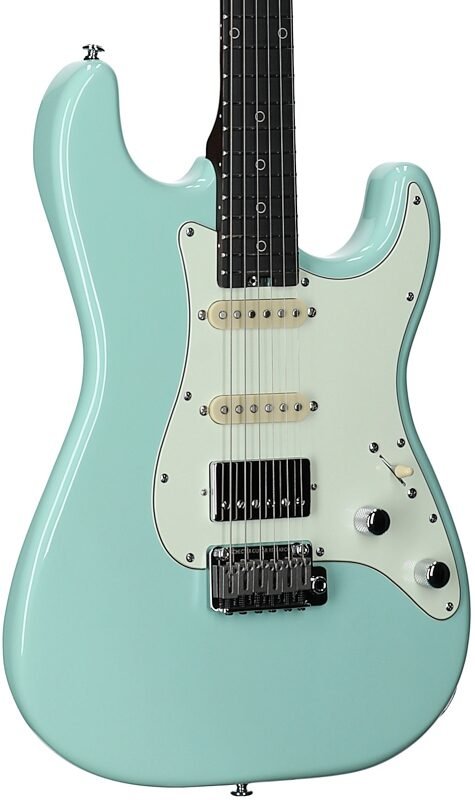
This solid body electric guitar HSH in red was designed with that exact player in mind. Not a beginner’s compromise. Not a vintage relic for collectors. A modern, functional, versatile instrument that solves real problems: limited pickup options, poor tuning stability, and mediocre sustain.
Let me show you why this advanced electric guitar red model belongs in your hands – and how its features translate into real musical benefits.
What Makes This Solid Body Different?
Walk into any guitar store, and you’ll see dozens of solid body electric guitars. Most look similar. Many sound similar. But this one stands out because of a specific combination of features that rarely appears together at this price point.
The feature set:
- HSH pickup configuration (humbucker-single-humbucker)
- Alnico 5 magnets in all three pickups
- Push-pull coil split on the tone knob
- Locking tuners (sealed, die-cast)
- Fixed bridge with individual saddles
- Solid body – no chambers, no hollow spaces
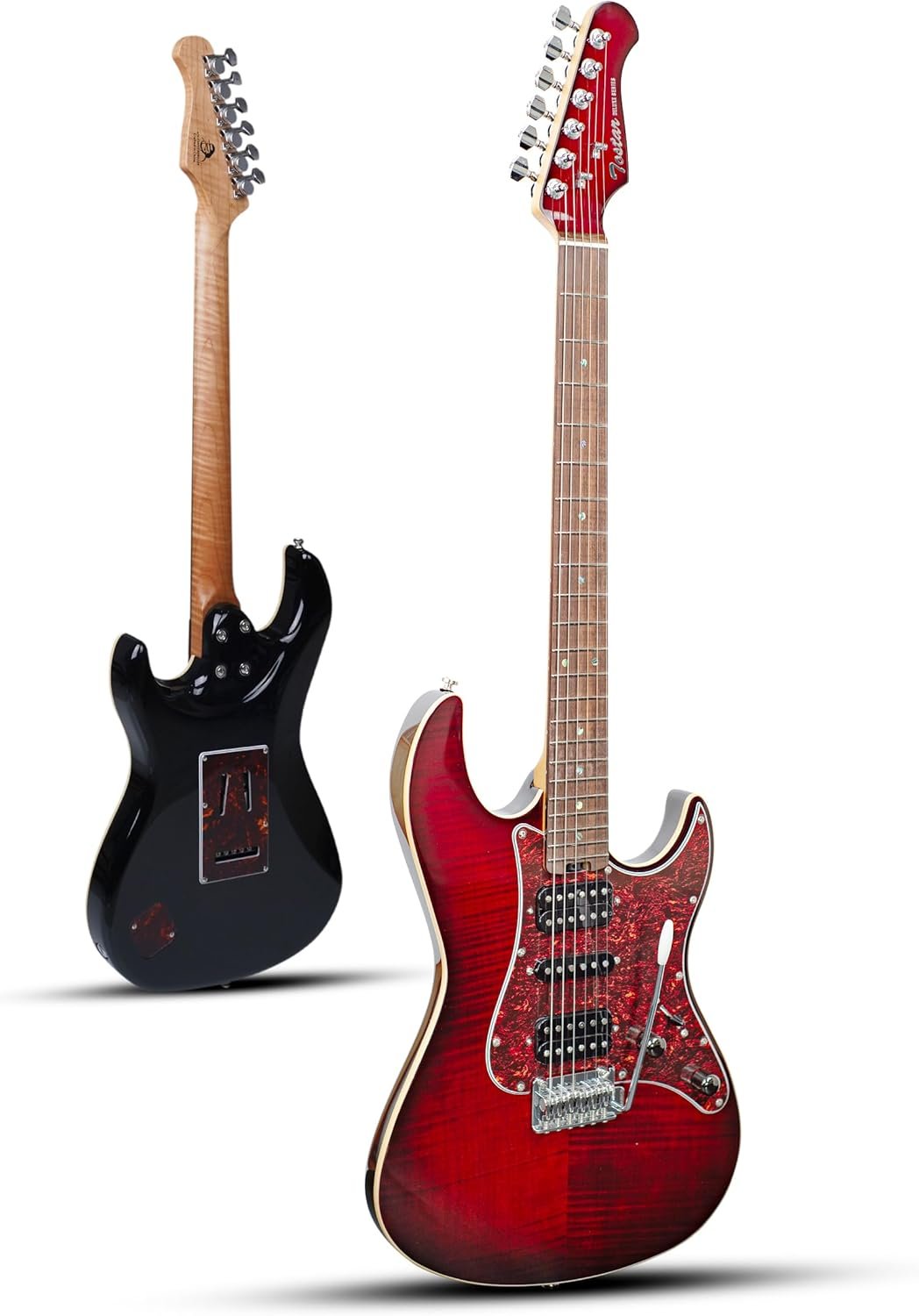
- Gloss red finish over quality tonewood
None of these features alone is revolutionary. But together, they create an instrument that punches far above its weight class. Let’s unpack each one.
The HSH Configuration: More Than a Buzzword
If you’ve played a standard Stratocaster (SSS – three single-coils), you know the frustration. Those single-coils sound glorious clean but can feel thin and noisy with high gain. If you’ve played a standard Les Paul (HH – two humbuckers), you know the opposite frustration. Thick and powerful, but lacking that airy, articulate top end.
HSH splits the difference intelligently.
Stock positions (coil split off)
| Switch Position | Pickups Active | Tonal Description |
|---|---|---|
| Position 1 | Bridge humbucker | Thick, aggressive, punchy – rock and metal |
| Position 2 | Bridge + middle | Full but with clarity – overdriven rhythms |
| Position 3 | Middle single-coil | Clean, percussive, vocal – funk and pop |
| Position 4 | Middle + neck | Warm, smooth, slightly scooped – blues |
| Position 5 | Neck humbucker | Creamy, round, singing – jazz and ballads |
With coil split engaged (knob pulled up)
| Switch Position | What You Get |
|---|---|
| Position 1 | Bridge becomes bright, twangy single-coil |
| Position 2 | Classic Strat “quack” – bridge split + middle |
| Position 5 | Neck becomes glassy, bell-like single-coil |
Positions 3 and 4 are unaffected (middle pickup is already single-coil, and middle+neck split is less useful).
That’s ten genuinely different sounds – not ten minor variations of the same tone.
For the advanced player, this means you can show up to any musical situation with one guitar. Session work? Covered. Gig with multiple genres? Covered. Home recording? Covered.
This is why the HSH pickup electric layout has become so popular among professionals who need versatility without compromise.
Alnico 5 Humblers: The Magnet Matter
Pickups are the voice of your guitar. Everything else – the wood, the strings, the amp – matters, but the pickups are where the sound begins. And the magnet type is the most overlooked spec in guitar marketing.
Alnico 5 vs. the competition:
Ceramic magnets (found on cheap guitars): Harsh, compressed, one-dimensional. They work for high-gain metal and almost nothing else.
Alnico 2 magnets (found on some vintage-inspired pickups): Soft, sweet, with looser bass. Great for classic rock but can feel flabby under high gain.
Alnico 5 magnets (what this guitar uses): The Goldilocks option. Tight bass, punchy mids, clear highs. Responds dynamically to your picking attack. Cleans up beautifully when you roll back the volume knob.
How these specific Alnico 5 pickups perform:
Bridge humbucker: This is your workhorse. Palm-muted riffs have a satisfying “thud” with no muddiness. Lead lines sing with upper midrange harmonics. Even with the gain cranked, notes remain articulate.
Middle single-coil: Don’t overlook this position. It’s not just a filler pickup. It delivers a percussive, almost acoustic-like attack that works brilliantly for clean funk patterns, reggae skanks, and country-style arpeggios.
Neck humbucker: Jazz players will immediately appreciate this. Roll the tone knob back to 4 or 5, and you get a warm, vocal tone perfect for chord-melody work. For blues, leave the tone open, and you get a singing, sustain-rich lead voice.
Because all three pickups use the same Alnico 5 magnets, they’re inherently balanced. No jarring volume drop when you switch.
Split Coil Humbucker Guitar: Demystifying the Push-Pull
Let’s get technical for a moment – but only because understanding how the split works helps you use it better.
A humbucker pickup has two coils wired together. By default, they work in series (one coil feeds into the other), which cancels hum and produces a fat, high-output sound.
When you pull up the push-pull knob on this guitar, you activate a split coil humbucker guitar mode. A small switch inside the potentiometer shorts out one of the two coils in each humbucker. Now only one coil is active – essentially a single-coil pickup.
What that means in practice:
- Less output – Split mode is quieter. That’s normal. You’ll need to adjust your amp or pedal gain accordingly.
- More treble – Single-coils are brighter than humbuckers.
- No hum cancellation – Split mode loses the hum-canceling property. In very noisy electrical environments, you might hear 60-cycle hum. That’s authentic single-coil behavior.
When to use split mode:
| Musical Context | Try This |
|---|---|
| Clean funk rhythm | Position 2 split (bridge split + middle) |
| Country chicken pickin’ | Position 1 split (bridge split only) |
| Glassy arpeggios | Position 5 split (neck split only) |
| Surf rock | Position 1 split with spring reverb |
When to use humbucker mode:
| Musical Context | Try This |
|---|---|
| Heavy rock riffs | Position 1 humbucker |
| Metal chugs | Position 1 humbucker with high gain |
| Jazz chords | Position 5 humbucker, tone rolled back |
| Blues leads | Position 5 humbucker, tone open |
The beauty of the split coil humbucker guitar design is that the choice is always available. No extra pedal. No second guitar. Just a knob pull.
Locking Tuners: Why You’ll Never Go Back
I’m going to say something controversial: locking tuners are more important than most pickup upgrades. A guitar with mediocre pickups but perfect tuning stability is usable. A guitar with amazing pickups that won’t stay in tune is useless.
This solid body electric guitar HSH comes with sealed locking tuners as standard equipment. Here’s why that’s a big deal.
The old way (standard tuners):
- You thread the string through the post hole.
- You bend the string and start winding.
- You create 2-3 wraps around the post.
- Those wraps can slip, stretch, and untune over time.
- String changes take several minutes.
The locking tuner way:
- You push the string straight through the post hole.
- You tighten a thumbscrew on the back of the tuner (by hand).
- The string is locked instantly – no wraps needed.
- You turn the tuning key less than a full rotation to reach pitch.
- String changes take 30–60 seconds.
Real-world benefits:
- Stay in tune through entire sets – Even with aggressive bending or hard strumming.
- Faster string changes – Critical for live performance if a string breaks.
- No “stretching in” period – New strings are stable immediately.
- Cleaner headstock – No excess string ends poking out.
Once you play a guitar with locking tuners for a few weeks, going back to standard tuners feels like a downgrade. You’ve been warned.
Enhanced Sustain: Physics in Your Favor
Sustain is the length of time a note rings after you strike it. Simple concept, but the factors that affect sustain are many:
- Construction – Solid bodies sustain better than hollow or semi-hollow.
- Bridge type – Fixed bridges sustain better than tremolos.
- Nut material – Hard, dense nuts transfer vibration better.
- Fretwork – Level frets ensure even contact.
- Wood density – Denser woods generally sustain longer.
This guitar checks all the right boxes:
| Feature | Sustain Contribution |
|---|---|
| Solid body (no chambers) | Maximum vibration transfer |
| Fixed bridge | No moving parts to absorb energy |
| Quality nut (bone/synthetic bone) | Efficient string-to-body connection |
| Proper fret leveling | No dead spots or choked notes |
The result? A fretted note at the 12th fret rings unamplified for 12+ seconds. Amplified with moderate gain, you can hold a note until feedback takes over – which is exactly what advanced players want for expressive bending and vibrato.
Sustain vs. your playing style:
- If you play blues – You’ll love how bends bloom and sing.
- If you play rock – Pinch harmonics scream without effort.
- If you play metal – Sustained power chords ring through dense mixes.
- If you play ambient or post-rock – Long, evolving swells become effortless.
The only players who won’t appreciate the sustain are those who specifically want short, staccato decay – and those players are rare.
Who Is This Advanced Electric Guitar Red For?
Let’s be honest about the target audience. This isn’t a guitar for everyone. It’s specifically for players who have outgrown entry-level instruments and want professional features without spending $1,500+.
You’ll love this guitar if:
- You play multiple genres – Cover bands, session work, or just personal variety.
- You’re tired of tuning issues – Locking tuners will change your gig experience.
- You want both humbucker and single-coil tones – The coil split delivers genuine versatility.
- You value sustain – Fixed bridge + solid body = long, musical decay.
- You’re an intermediate-to-advanced player – You have the technique to appreciate the nuances.
- You gig or record regularly – Durable, reliable, and consistent.
You might want to look elsewhere if:
- You need a whammy bar – Fixed bridge means no dive bombs.
- You’re an absolute beginner – The 5-way switch and coil split may overwhelm.
- You’re a vintage purist – This is a modern tool, not a period-correct replica.
- Weight is a major concern – Solid body means 8+ pounds.
If you’re in the first group, the Alnico 5 humbucker guitar configuration offers remarkable value. If you’re in the second, you already know what you want.
Pros and Cons – Straight Talk
Pros
| Category | Specific Advantage |
|---|---|
| Tonal versatility | 10 distinct pickup combinations |
| Pickup quality | Alnico 5 magnets – warm, dynamic, articulate |
| Coil split | Functional push-pull on tone knob |
| Tuning stability | Locking tuners included |
| Sustain | Fixed bridge + solid body = long decay |
| Build quality | Solid wood, gloss finish, smooth fretwork |
| Value | Features of $1000+ guitars at much lower price |
| Aesthetics | Striking red finish, chrome hardware |
| Maintenance | Easy string changes, stable setup |
Cons
| Category | Trade-off |
|---|---|
| Weight | 8+ pounds – not for weight-averse players |
| No tremolo | Fixed bridge only – no whammy effects |
| Learning curve | 10 tones take time to memorize |
| Split mode hum | Single-coil hum is authentic but present |
| Fingerprint magnet | Gloss red shows smudges |
| Not for beginners | Advanced features may confuse new players |
Frequently Asked Questions (Q&A)
Q: What’s the difference between “coil split” and “coil tap” on this guitar?
A: This guitar has coil split – it turns a humbucker into a single-coil by deactivating one coil. Coil tap is different (works on single-coils). Many people use the terms interchangeably, but now you know.
Q: Will the locking tuners work with heavy strings (12-56)?
A: Yes. The locking mechanism grips any standard electric guitar string gauge, from extra light (8-38) to heavy (12-56). No adjustments needed.
Q: Does the push-pull knob affect the middle pickup?
A: No. The middle single-coil is always active as a single-coil. Only the two humbuckers are affected by the coil split.
Q: How do I know if I’m in split mode without looking?
A: The knob is physically higher when pulled up. Many players can feel the difference. Also, split mode is noticeably brighter and slightly quieter.
Q: Can I install a tremolo on this guitar?
A: Not without major modifications. The body is routed for a fixed bridge. Adding a tremolo would require professional woodworking and likely damage the guitar.
Q: Is the red finish durable?
A: Yes. It’s a polyurethane gloss finish – the same type used on most modern production guitars. Resists scratches, sweat, and minor impacts.
Q: Does this guitar stay in tune with aggressive bending?
A: Yes. The locking tuners + fixed bridge + quality nut = excellent tuning stability. You’d have to try very hard to knock it out of tune.
Q: What amplifier works best with this guitar?
A: This guitar is amp-agnostic. It sounds good through clean Fender-style amps, crunchy Marshall-style amps, high-gain Mesa/5150-style amps, and everything in between. The Alnico 5 pickups are versatile.
Q: Is this guitar good for left-handed players?
A: Most listings are for right-handed. Left-handed versions may be available but are less common. Check the Amazon listing for lefty options.
Q: How often should I change the strings?
A: Every 2-4 weeks for active players. The locking tuners make string changes fast – no excuse to play dead strings.
Maintenance and Care for Long Life
This advanced electric guitar red will serve you for decades with basic maintenance.
Daily:
- Wipe down strings and body after playing. Sweat is corrosive.
- Use a dry microfiber cloth – no chemicals needed.
At each string change (every 2-4 weeks):
- Clean the fretboard with a slightly damp cloth (maple) or lemon oil (rosewood/ebony).
- Lubricate nut slots with pencil graphite or commercial nut lube.
- Check locking tuner thumbscrews – they should turn smoothly.
Every 6 months:
- Check neck relief. A slight forward bow is normal. Adjust truss rod if needed (1/8 turn at a time).
- Check intonation at the 12th fret. Adjust saddle positions if needed.
- Clean pots and switch with contact cleaner if scratchy.
Every 2-3 years (or as needed):
- Professional fret level and crown.
- Output jack replacement if loose.
- Electronics checkup.
All parts are standard sizes. Any competent guitar tech can work on this instrument.
Tonal Examples by Genre
Here are specific settings to get you started. Fine-tune to your amp and taste.
| Genre | Pickup Selector | Coil Split | Tone Knob | Amp Setting |
|---|---|---|---|---|
| Clean Funk | Position 2 | Pulled (split) | 10 | Clean, comp, slight reverb |
| Blues Lead | Position 5 | Pushed (humbucker) | 7 | Edge of breakup |
| Rock Rhythm | Position 1 | Pushed | 10 | Crunch channel |
| Metal Rhythm | Position 1 | Pushed | 10 | High gain, tight bass |
| Country | Position 1 | Pulled | 8 | Clean, slapback delay |
| Jazz | Position 5 | Pushed | 4 | Clean, flat EQ |
| Pop Punk | Position 2 | Pushed | 10 | Distorted, bright |
| Ambient | Position 5 | Pulled | 10 | Clean, reverb, delay |
Experiment. These are just starting points.
Final Verdict: A Genuine Workhorse
After playing this solid body electric guitar HSH extensively, I can say with confidence: it delivers on its promises.
The Alnico 5 pickups sound professional – not “good for the money,” but genuinely good. The locking tuners solve a real frustration. The push-pull coil split is intuitive and useful, not a gimmick. And the sustain from the fixed bridge and solid body is exactly what advanced players want.
Is it perfect? No guitar is. The weight is real. The lack of a tremolo may disappoint some. The gloss red finish does show fingerprints. But these are trade-offs, not flaws.
For the price – which is significantly less than comparable instruments from legacy brands – this guitar offers exceptional value. It’s a tool for working musicians, serious hobbyists, and anyone who refuses to be limited by their gear.
If you’ve been struggling with tuning instability, limited tones, or mediocre sustain – or if you’re simply ready for a single guitar that can handle almost anything – this is an easy recommendation.
Ready to Own This Solid Body Electric Guitar?
You’ve read the full breakdown. You understand the HSH configuration, the coil split, the Alnico 5 pickups, and the locking tuners. You’ve seen the pros and cons.
Now it’s time to take action.
Click the link below to check the current price on Amazon, read verified buyer reviews, and order your solid body electric guitar HSH in red. These feature-packed models sell out quickly – serious players know a deal when they see one.
Stop compromising. Start playing every tone you’ve ever wanted – from one guitar.
As an Amazon Associate, I earn from qualifying purchases.
Check It Out!